

A well-made sofa can outlast several changes of paint colour, flooring and family life. Its fabric may be worn, faded or no longer suited to the room, but a sound frame and comfortable proportions are not easily replaced. That is why furniture reupholstery Sydney homeowners choose is often less about fixing an old piece and more about keeping a piece that is already right for them.
The best candidates are not always antiques. A favourite armchair, a quality modular sofa, a dining chair with a loose joint or an upholstered bedhead can all benefit from careful restoration. The decision comes down to what sits beneath the fabric, how the furniture is used, and whether its construction is worth preserving.
When furniture reupholstery Sydney is the right choice
Reupholstery makes particular sense when furniture has a solid timber or metal frame, good proportions and a level of comfort that newer furniture may not match. Older pieces were often built with repair in mind, using separate components that can be tightened, rebuilt or replaced. A quality contemporary piece may also be a strong candidate if its frame remains sound and its design suits your home.
Sentimental value matters too. An inherited lounge, a grandfather chair or a dining setting that has hosted years of family gatherings can be updated without losing its character. New fabric can place the piece comfortably in a modern interior while retaining the shape and history that made it worth keeping.
It is not always the best option. Furniture with a badly compromised particleboard frame, extensive water damage, severe pest damage or low-grade construction may cost more to restore than it is worth. A proper assessment should be frank about this. Reupholstery is skilled, individual work, so it is most worthwhile when the underlying furniture deserves that level of attention.
Look beyond the surface fabric
A fabric tear is obvious. Less obvious issues include sagging seats, loose arms, creaking frames, tired foam and broken webbing. These faults do not necessarily rule out restoration. In many cases, they are exactly what an experienced upholsterer is equipped to address.
The important question is whether the frame can be stabilised and the support system renewed. A sofa that looks tired may have an excellent hardwood frame beneath it. Conversely, a piece that looks presentable can have structural problems that need attention before any new cover is fitted.
What quality reupholstery involves
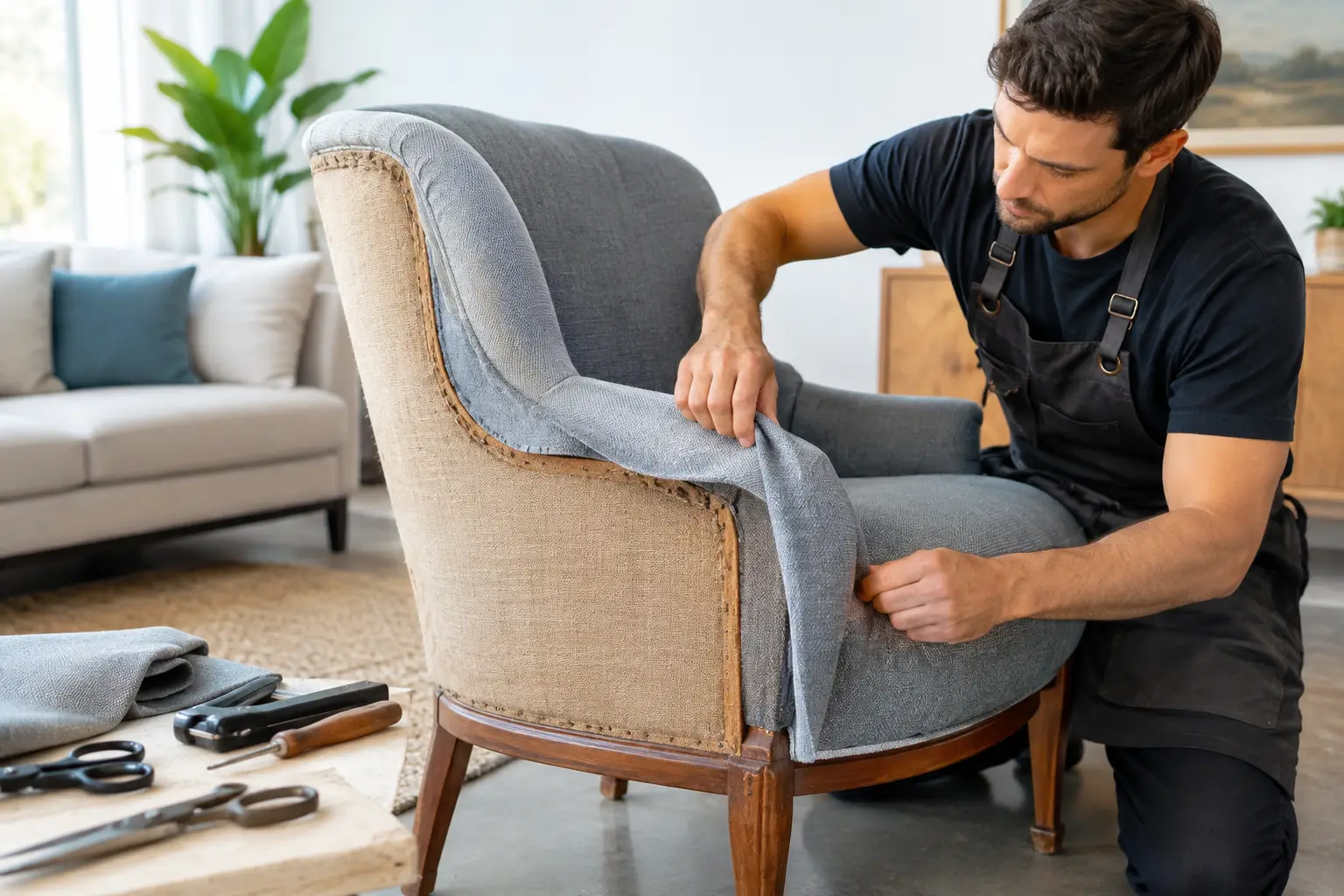
A complete upholstery project is not simply a matter of placing new fabric over old. The existing cover is removed so the construction can be inspected properly. This reveals the condition of the frame, springs, webbing, seat support, foam and padding.
Where needed, the furniture is repaired before the new upholstery is applied. That may involve regluing and reinforcing joints, replacing webbing, rebuilding springs, renewing foam or adjusting the underlying padding to improve comfort and shape. Only then does the fabric work begin.
Fabric must be measured and cut with care, particularly on sofas with curves, buttoning, piping, skirts or patterned material. Pattern matching can make a considerable visual difference, especially with stripes, checks and large-scale prints. Cushions need the right fill and finish to sit neatly, hold their form and suit the way the furniture is used.
For a tailored result, the details matter: the line of a seam, the firmness of a cushion, the placement of piping, the depth of a button and the tension of the cover. Cover It Upholstery has worked with traditional methods including diamond buttoning and spring-edge work, alongside contemporary designs with cleaner lines and modern finishes.
Re-covering and restoration are not quite the same
Re-covering focuses on renewing the visible fabric and may include selected repairs or replacement padding. It is ideal for furniture that is structurally sound but visually dated, stained or worn.
Restoration goes further. It may include frame repairs, rebuilding internal support, preserving original details and retaining the character of an antique or significant piece. The right approach depends on the furniture itself. A mid-century lounge may benefit from a fresh, understated wool blend, while an antique chaise may require a more considered restoration that respects its original construction.
Choose fabric for daily life, not just the sample book
Fabric selection is one of the most enjoyable parts of reupholstery, but it needs to be practical. A beautiful pale linen may suit a formal sitting room, while a busy family lounge may be better served by a hard-wearing woven fabric with texture and depth of colour. Homes with pets, young children or frequent entertaining need fabrics that are forgiving as well as attractive.
Think about where the furniture sits. Sydney light can be strong, particularly near large windows, so fading should be considered. Dining chairs encounter food and drink spills. A commercial banquette needs a different level of durability again, as it must withstand regular public use while maintaining a professional appearance.
Texture also changes how a room feels. Velvet can bring richness to an occasional chair or bedroom bench. A tightly woven fabric can give a streamlined sofa a crisp, contemporary finish. Natural fibres offer warmth and character, while performance fabrics can be a sensible choice for high-use pieces. The best material is rarely the most fashionable one in isolation. It is the one that works with the furniture, the room and the people using it.
Respecting antique furniture without freezing it in time
Antique upholstery calls for restraint and judgement. It is possible to retain the original feel of a piece without making it look like it belongs only in a museum. The timber, shape, joinery and traditional details should guide the work.
Techniques such as hand buttoning, traditional spring work and carefully shaped padding can be important to preserving an antique’s profile. Replacing these elements with unsuitable modern shortcuts can alter the way the piece sits and feels. At the same time, a new fabric can make an inherited chair or settee useful in a contemporary home again.
This balance is particularly valuable for owners who want to use their furniture rather than store it away. Restoration should support the next chapter of a piece’s life, not simply imitate its past.
Understanding cost and value
There is no single price for reupholstery because every item has different dimensions, construction, fabric requirements and repair needs. A simple occasional chair requires a different amount of labour and material from a buttoned sofa with loose cushions, sprung seating and a patterned fabric.
When comparing the cost of restoration with replacement, compare like with like. Many mass-produced sofas have a short expected life and cannot be economically repaired once their frames or support systems fail. A well-built sofa that is restored properly can provide many more years of service, with a fabric and finish chosen specifically for your home.
There is also the value of retaining furniture that fits. An existing sofa may suit an awkward alcove perfectly. A cherished chair may be the correct height, scale and comfort for its owner. Reupholstery allows you to keep those qualities while changing the colour, texture or overall mood of the room.
How to begin a reupholstery project
Start by taking clear photographs of the furniture from the front, back and sides. Include close-ups of damage, loose seams, worn cushions or areas of concern. If possible, note the approximate dimensions and let the upholsterer know how the item is used – whether it is in a busy family room, a quiet bedroom, a restaurant or a reception area.
It helps to be clear about your priorities. You may want to preserve the original appearance, improve comfort, select a more durable fabric, or make a dramatic design change. These aims affect the recommendation for materials, repairs and construction details.
An experienced workshop can then advise whether the piece is suitable for reupholstery and what work is likely to be required. This early discussion is the right time to ask about fabric options, cushion fillings, repairs and the practicalities of collection or delivery.
Good furniture earns its place over time. If the frame is worth keeping, the comfort is familiar and the proportions still work in your home, a considered reupholstery project can give it another long and useful life.
